Pages

Photography courses Announcement

Photography courses Announcement
Flame Tree Media Trust and Time School of Journalism announces Photography courses to begin soon at Talent Media Learning Centre at Ilala in Dar es Salaam, download this advert for more details.
Showing posts with label Tanzania. Show all posts

Tuesday, September 13, 2011

"A Beautiful Desert Rose" photo exhibition on show in Paris

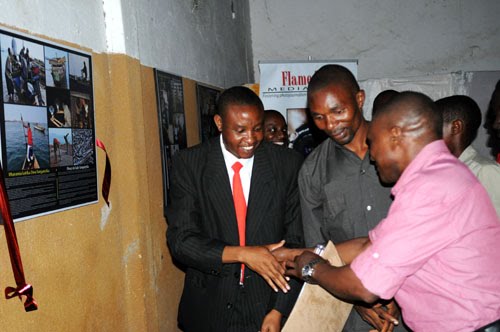
 Opening the 3rd Exhibition in Paris, The French Minister for Culture and Communication, Frederic Mitterrand, said, "Mwanzo, I am deeply touched by the subject you chose to deal with, albinism and the problems encountered by. I am amazed by your humanistic feeling about these people and the quality of your work is fantastic. Lets have a picture together." He dragged me and we posed for a picture


A BEAUTIFUL DESERT ROSE
Mwanzo Millinga, Tanzania
My inspiration to photograph people with albinism is based on personal admiration of them as beautiful people.

Beauty, as a study in aesthetics, is an entity which is adored, or has characters that are refered to beauty. These can either be individual or in a civilization, that involve the interpretation of some entities as being in balance and harmony with nature. The interpretation may lead to fealings of attraction and emotional well-being. Therefore, beauty is a subjective experience, and it is always said that « beauty is in the eye of the beholder. »

Biologically, albinos are people who lack pigment in their skin, eyes and hair. According to biological findings, majority of albinos are dying at the age of 40 mainly due to skin cancer and sun burn. The genetic disorder causing albinism also results in abnormal vision and, nystagmus which is an involuntary eye movements.

Albinos in Tanzania face two major problems. The first problem is genetic disorder in relation in relation to the environment. This shortern their life as sun burn and skin cancer make them die earlier. The second major problem is the killing from fellow human beings.

There is a tendecy of some people to think of the power of witchcraft in realizing their success dreams. In connection of the albino killings, witchcraft is the main source of the killings. Unfaithful witchdoctors usually tell their clients about the use of albino body parts in making medicine for them to be rich and successful. This makes the demand of the albino body parts go up and increase the killings.

Those who kill the albinos believe that, the albinos have magical power in the superstition and wichcraft which, the perpetuators apply so as to increase their fortune. These include unmanly gold miners and fishermen in the Lake Zone and people in other businesses elsewhere in the country are trading in the body parts of albinos, including limbs, skin, hair and genitals, which they believe enable them catch more fish or strike huge precious minerals.

Albinos don’t enjoy the right to free movement and residency within the country. They are forced to be Inside their houses, go into exile or look for refuge in different places, in fear of being killed. Fear and lack of security, makes albinos more poor economically and psychologically tortured. Some 57 people with albinism have been murdered in Tanzania in recent years.

This state of insecurity for albinos, inspired me to photograph those who have run from their homes for safety, at Kabanga Disabled Centre, in Kasulu, Kigoma, in a style that I portray their beauty and dignity. I use the FRAME as a statement of « a life in a restricted environment.» They decided themselves on how to hold it.

According to Modest Magere (44), the head of the center, in 2008, the Kasulu District Council, decided that Kabanga Centre should host albinos who free their home for safty following an increase of albino killings in different parts of Kigoma and the neighboring regions. The centre therefore, is provided with night police patrol.

I, personally belive that, the chategorization of a person as beautiful, albinos included, whether on an individual basis or by community concensus, is often based on some combination of inner Beauty, which includes personality, intelligency, grace, politeness, charisma, integrity, and elegance, and outer Beauty, which includes physical factors such as health, youthfulness, facial symetry, and complexion. Albinos are no exceptional to these qualities, and they deserve  to be adored as beautful and loved.  END.


Wednesday, May 4, 2011

SILENT VOICES PHOTO EXHIBITION

© Jumanne Gange, Kigoma
© Happy Severine
© Haji Khatibu Haji, Zanzibar
© Haroub Hussein Khamis, Zanzibar
© Friday Simbaya, Iringa
© Fredrick Katulanda, Mwanza
© Ester Sumira, Shinyanga
© Emmy Reid, Mwanza
©Elibariki Mafore, Lindi
©Edward Kigadye, Kigoma
©Danny Mkuchu, Lindi
©Christopher Lilai, Lindi
©Bernard Rwebangira, Dar
©Beatrice Rabach, Mwanza
© Boniface Mpagape, Kigoma
©Athuman Mtepa, Lindi
©Ali Lityawi, Shinyanga
©Anthony Kayanda, Kigoma
©Anita Boma, Iringa
©Ahmed Abdulaziz, Lindi

Monday, April 18, 2011

Tuesday, April 12, 2011

"SILENT VOICES" PHOTO EXHIBITION IN DODOMA


“SILENT VOICES” - SAUTI NYAMAVU

A PHOTO EXHIBITION BY PARTICIPANTS OF THE EFFECTIVE RURAL PHOTOJOURNALISM COACHINGPROJECT 2010/11

Flame Tree Media Trust has, for past one year, implemented the Effective Rural Photojournalism Coaching project, by funding from Tanzania Media Fund (TMF). The project aimed at empowering regional photojournalists with the skills that they might use to visualize grass-root issues by powerful photographic images.

The photojournalists were coached on how to generate ideas, select approach and visualize them, as we can witness this exhibition today.

The objectives of the project among others, are; to support quality journalism and to develop the skills of the Tanzanian photographers and writing journalists, so that their work can contribute to improved quality of the media content, better policies and good governance in the country.

The coaching covered the following regions: Lindi, Iringa, Mwanza, Shinyanga, Zanzibar and Kigoma in a period of one year beginning May 2010. The project has produced a year wall calendar of 2011, this photo exhibition and a book, which is still in the publishing process.

The complete set of this exhibition is comprised of 54 posters with a total of 446 photographs. We believe, it is the first big mobile photo exhibition to have been produced and shown within the country. More importantly, it focuses on the different grassroots’ issues in our most known rural communities.


The following photojournalists and their respective regions participated in the project.

ERPC – Rural issues Covered

Lindi

Participant

Issues

1. Marry Mpandula

Early Pregnancies

2. Kijakazi Yunus

Deforestation

3. Abdulaziz Ahmed

Sanitation

4. Athuman Mtepa

Road signs vandalism

5. Christopher Lilai

Crossing Lukuledi River

6. Denny Mkuchu

Deserted infrastructures

7. Happy Severine

Education – Teachers housing

8. Utegele Ibrahim

Water in Mchinga

9. Said Hamdani

Miners

10. Elibariki Mafore

Homeless people

11. Mwanja Ibadi

----------------

Iringa

1. Anita Boma

Pawaga Livestock keepers

2. Daudi Mwangosi

Rural life

3. Friday Simbaya

Tomato farming - Ilula

4. Ibrahim Issa

-----------------

5. Janeth Matondo

Nzihi Dispensary

6. Mawazo Malembeka

Mtera fishing camps

7. Oliver Motto

Deserted kids

8. Selina Ilunga

Out of focus

9. Sima Bingileki

Domestic Violence

10. Vicky Macha

Water born diseases

Mwanza

1. Erika Elias

Women in mining

2. Fredrick Katulanda

1. Kids miners/ 2. Street children

3. John Sanjo

Artisan miners

4. Jovither Kaijage

Bilharzias - Ukerewe

5. Twalad Salum

Traditional healers

6. Beatrice Rabach

Elders life – Bukumbi

7. Devota Sotel

--------------------

8. Emmy Reid

Women entrepreneurs

9. Jovin Mihambi

--------------------

10. Sheila Seizzy

HIV in Ukerewe

11. Wilson Elisha

Family Planing

Shinyanga

1. Ali Lityawi

Elders killing

2. Ester Sumira

Herder life

3. Patrick Mabula

Traditional dance

4. Raymond Mihayo

Mother pupils

5. Shija Felician

Albino kilings

6. Steven Kidoyayi

Ward school’s challenges

7. Alex Sayi

--------------------

8. Suleiman Abedi

Environmentalist

9. Suzzy Butondo

--------------------

10. Stella Ibengwe

--------------------

11. Moses Augustine

Kwashakoo

Zanzibar

1. Haji Khatibu Haji

Malaria achievements

2. Haroub Hussein Khamis

Unity government opinions

3. Mgeni Khamis Kombo

Clove farming - Pemba

4. Salimu Talibu Omar

Stone bricks making - Pemba

5. Sharifa Rashid Said

Widows – Pemba Political turmoil

6. Abdallah Masangu

Students transportation

7. Hamad Hija Hamad

Infrastructures

8. Khamis Mohamed Salum

Drug abuse

9. Maulid Yusuf Ali

Umbuji dispensary

10. Mwinyinvua Abdi Nzuki

Dairy goats -Women project

Kigoma

1. Anthony Kayanda

Piracy in Lake Tanganyika

2. Boniface Mpagape

Forced social displacement – Albinos

3. Deogratias Nsokolo

The disabled family life

4. Edward Kigadye

Making burnt bricks

5. Prosper Kwigize

Robbery in Kibondo

6. Jacob Ruvilo

School office turned teacher’s house

7. Jumanne Gange

Passenger train

8. Kassim Msoma

School without desks

9. Mwajabu Kigaza

Fistura

10. Fadhil Abdalah

-----------------------

Popular Posts

Total Pageviews